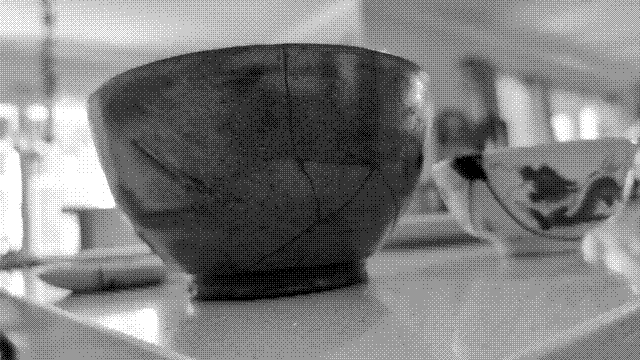
I began learning how to do kintsugi repair as a natural consequence of my work with ceramics. I don't put much faith in the chemicals industry these days, as they've demonstrated that they absolutely will perpetuate global health and environmental disasters for as long as they are able to get away with it, so I wanted to avoid using epoxies.
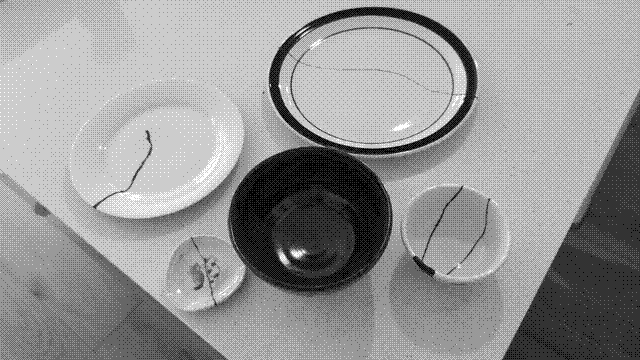
Kintsugi repair uses urushi, refined sap from the "Chinese laquer tree" (toxicodendron vernicifluum), mixed with fillers and flour, to bind together or fill in gaps left by broken pieces of ceramic. This is then covered by alternating layers of lacquer mixed with black or red pigment, with the first layer being black and the final layer being red. In between applications, the lines are wet-sanded and cleaned up. Traditionally, the final application of lacquer has gold powder sprinkled on top while it is still sticky. This is then burnished with a bit of soft cloth or a cotton ball. This helps protect the lacquer underneath and gives the final piece the look associated with kintsugi.
The final pieces are no more durable than any other piece of lacquerware and must be treated accordingly. They cannot be microwaved or put in the dishwasher, as this will cause the lacquer to begin flaking off.
Technically what I do is not kintsugi, as I omit this final gold-powdering step. I would consider "laquerware repair" a more accurate term. "Kintsugi" is a better-known term, however, and one which is commonly misunderstood. Most of the people I've met seem to have assumed kintsugi involved fusing pieces together with solid melted gold. Introducing my work as "traditional kintsugi without gold" allows me to quickly and easily sniff out and dispell this misconception (without confusing people into thinking I'm doing something with gold-colored epoxy) before revealing what I would consider a more accurate (though more confusing for the uninitiated) term.